



Revelation 18 Part 1 - Babylon Is Fallen
Pastor Wes Denham
Revelation 18 opens with a thundering angelic declaration—”Babylon the great is fallen”—and Pastor Wes Denham walks through this chapter as John’s vision of the complete collapse of the world’s intertwined religious and economic system. The chapter indicts a global order built on the “lust of the flesh, lust of the eyes, and the pride of life,” the same temptations that ensnared Eve in the garden. Pastor Wes frames Babylon not merely as a geographic location but as any system that substitutes independence from God for submission to Him.
Drawing on Psalm 73, Pastor Wes traces Asaph’s struggle with envying the wicked who appeared to prosper without consequence—and how that crisis resolved only when Asaph entered the sanctuary and saw their true end. He applies this directly to Revelation 18’s merchant class, kings, and shipmasters who weep at Babylon’s smoking ruins in a single hour. He also highlights verse 13’s haunting final commodity—”the bodies and souls of men”—connecting the ancient text to modern slavery and sex trafficking as evidence that the Babylonian spirit operates in the present, not just the prophetic future.
The application Pastor Wes draws is pointed: believers are called to “come out of her” (v. 4)—to step away from the values, entanglements, and compromises of a system God has already marked for judgment. He grounds this in Isaiah 57:15, where the God who inhabits eternity promises to dwell with the contrite and humble in spirit. Babylon’s pride—”I sit as a queen and will not see sorrow”—stands in direct contrast to the humility God honors, and Pastor Wes urges the congregation to let God form and reshape them rather than resist His hand.
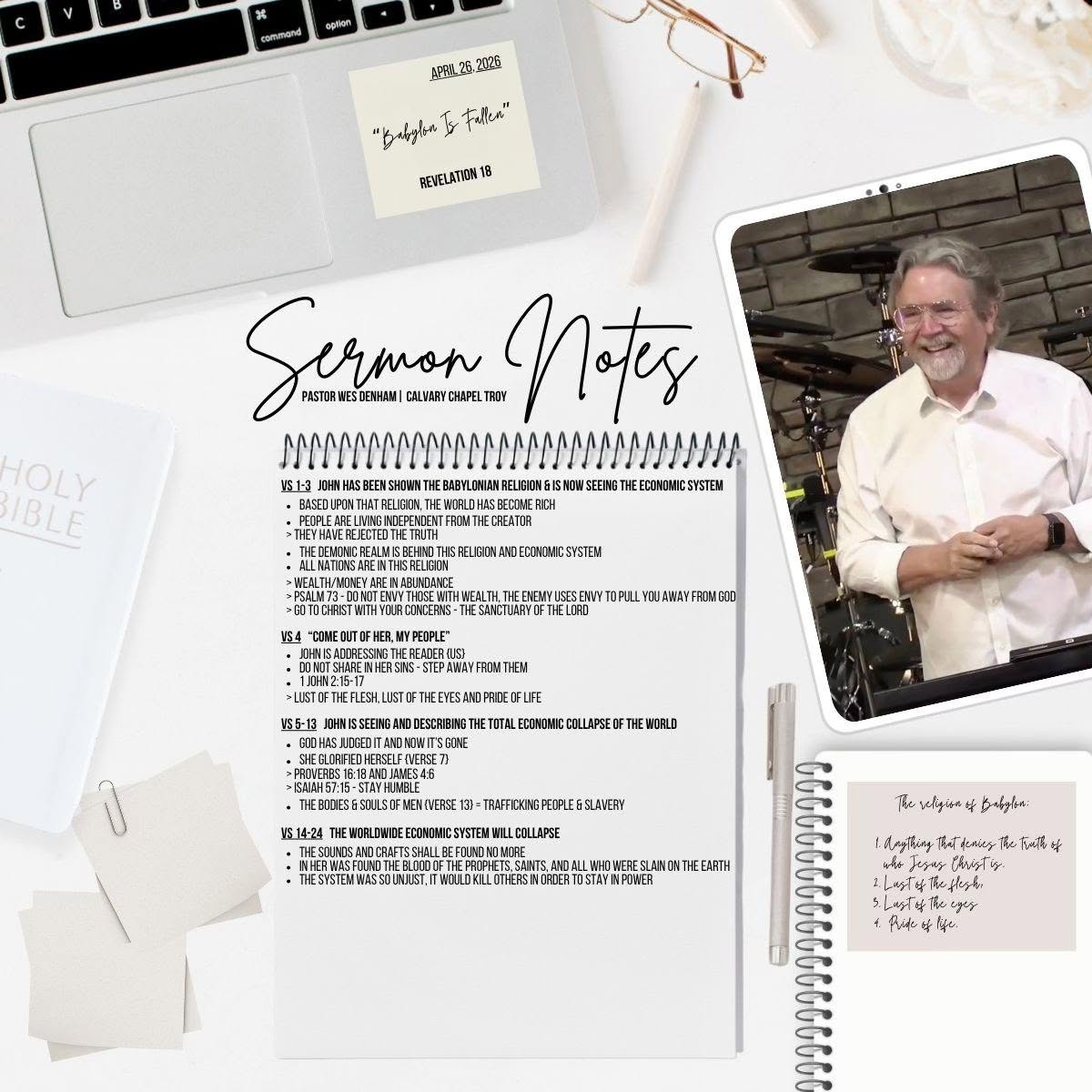
In Revelation 18, Pastor Wes Denham unpacks the prophesied collapse of Babylon—the world’s interlocking system of false religion and economic pride built on the lust of the flesh, lust of the eyes, and pride of life. Drawing on Psalm 73 and Isaiah 57:15, he calls believers to “come out of her”—stepping away from the spirit of Babylon and toward the humility that invites God’s presence and grace.