



Revelation 9 Part 1 - The Judgement Is Coming
Pastor Wes Denham
In this verse-by-verse teaching through Revelation 9:13–21, Pastor Wes Denham continues the study of the trumpet judgments poured out during the seven-year Tribulation. The sixth trumpet releases four angels bound at the Euphrates River, unleashing an army of 200 million horsemen that kills a third of mankind. Pastor Wes walks the congregation through the prophetic timeline—the rapture of the Church, the rise of the Antichrist, the seven-year peace treaty, and the desecration of the rebuilt temple in Jerusalem.
Pastor Wes expounds on several key details in the text—the significance of the golden altar and the martyrs beneath it from Revelation 6:9, and why the four bound angels are likely demonic rather than holy. He traces the Euphrates River back to the Garden of Eden, the first murder, and the Tower of Babel, suggesting it represents a region of long-standing demonic stronghold. He also examines John’s description of the horsemen—their red, blue, and yellow colors and their staggering number—and considers how modern realities like drone warfare may help illuminate this ancient vision.
The heart of the sermon lands on verses 20 and 21, where mankind refuses to repent despite catastrophic judgment. Pastor Wes turns this mirror on the contemporary church, warning against hardened hearts, cultural compromise, and the “just leave them alone” mentality replacing genuine evangelism. Drawing on the stories of Naaman the Syrian, King David’s confession, and Peter’s bitter weeping, he calls believers to keep short accounts with God—repenting quickly, walking humbly, and turning toward Jesus rather than the broken cisterns of this world.
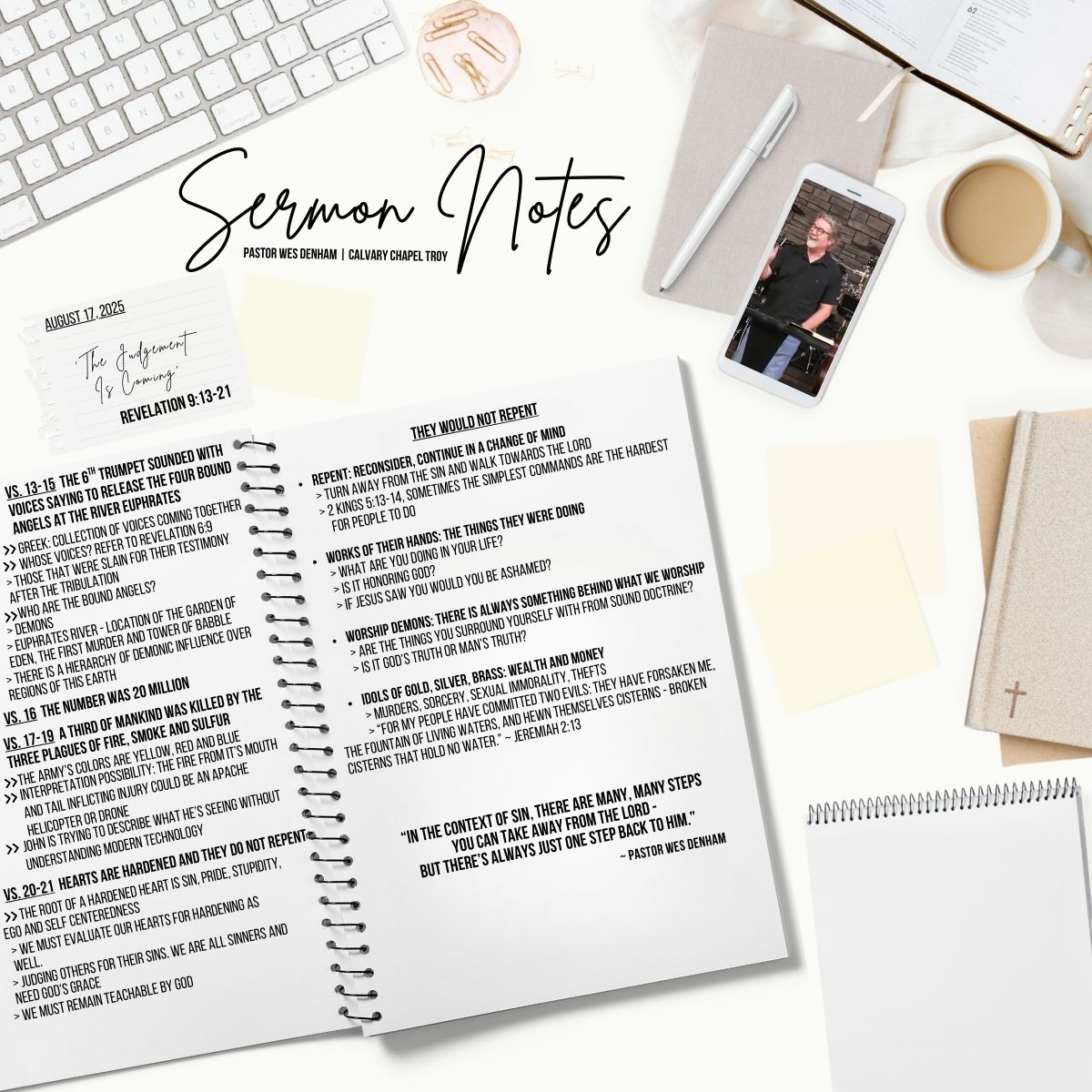
In this verse-by-verse teaching through Revelation 9:13–21, Pastor Wes Denham examines the sixth trumpet judgment—four demonic angels released at the Euphrates and an army of 200 million that kills a third of mankind. Despite the devastation, the survivors refuse to repent. Pastor Wes calls believers to soft, repentant hearts, warning against cultural compromise and urging the church to keep short accounts with God.